
ctDNA test: liquid biopsy indications and limitations
On this page
What liquid biopsy analyzes
Liquid biopsy tests blood or other body fluids, rather than tissue, for molecular alterations from a tumor. The analyte most widely used in clinical practice is circulating tumor DNA (ctDNA), the fraction of plasma cell-free DNA released by tumor cells. Because a ctDNA test needs only a blood draw, it offers a complementary option when a tissue biopsy is risky or insufficient.
The amount of ctDNA varies widely by tumor type and stage. In a study of 640 patients, Bettegowda and colleagues detected ctDNA in more than 75% of patients with advanced pancreatic, ovarian, colorectal, bladder, gastroesophageal, and breast cancer and melanoma, but in fewer than 50% of patients with primary brain, renal, prostate, or thyroid cancer.1 In localized disease, detection rates were 73% for colorectal cancer and 50% for breast adenocarcinoma, and ctDNA was often present in patients without detectable circulating tumor cells.1
Treatment selection in advanced disease
Current guidelines focus liquid biopsy indications on detecting actionable alterations that guide targeted therapy in advanced cancer. The 2022 ESMO Precision Medicine Working Group recommendations state that validated, adequately sensitive ctDNA assays can be used for this purpose in routine practice, provided their limitations are taken into account.2 They also list situations in which faster results are clinically important, or in which tissue biopsy is not possible or appropriate, as routine uses of ctDNA testing.2
Non-small cell lung cancer is where plasma ctDNA analysis first entered clinical practice. The 2021 consensus statement from the International Association for the Study of Lung Cancer (IASLC) describes ctDNA as the most extensively studied alternative to tissue genotyping in solid tumors, first adopted for detecting EGFR mutations.3 On June 1, 2016, the FDA approved a test that detects EGFR exon 19 deletions and L858R mutations in plasma from patients with metastatic NSCLC and called it the first approved "liquid biopsy test."4 Details are available in the FDA announcement.
Detecting resistance mechanisms
ctDNA can also reveal resistance alterations that emerge during treatment. In 206 patients with metastatic colorectal cancer, ctDNA detected clinically relevant KRAS mutations with a sensitivity of 87.2% and a specificity of 99.2%.1 Among 24 patients who relapsed after responding to EGFR blockade, 23 developed at least one mutation in MAPK pathway genes.1 ESMO, however, does not yet recommend monitoring for resistance mutations before clinical progression in routine practice.2
Plasma first or tissue first
Growing use of plasma-based next-generation sequencing (NGS) and FDA approval of two ctDNA assays in the United States led the IASLC to revisit the "plasma first" versus "tissue first" question.3 ESMO notes that tissue testing remains preferred for many patients, mainly because ctDNA assays are limited in detecting fusions and copy number changes.2 The choice depends on available tissue, the expected alteration type, and how quickly results are needed. The IASLC adds that data are most robust in NSCLC, but patients with other cancers may also benefit from this approach for targeted therapy selection.3
| Clinical use | ESMO 2022 position | Practical note |
|---|---|---|
| Actionable alterations in advanced cancer | May be used in routine practice | Requires a validated, adequately sensitive assay |
| No tissue available or rapid result needed | May be used in routine practice | Consider tissue testing after a non-informative result |
| Molecular residual disease in early-stage cancer | Not recommended in routine practice | High clinical validity; randomized evidence of utility varies by tumor type |
| Early monitoring of treatment response | Under research development | Not recommended for routine use |
| Resistance monitoring before progression | Under research development | Not recommended for routine use |
| Screening asymptomatic people | Under research development | Not recommended for routine use |
Limitations of ctDNA testing
The most important limitation of ctDNA testing is failure to detect alterations in patients whose tumors shed little DNA. Because of false-negative results, ESMO recommends considering reflex tissue testing after a non-informative ctDNA result.2 The 2018 ASCO and CAP joint review also found discordance between ctDNA and tissue genotyping and supports confirming undetected results with tissue testing.5 The same review reported insufficient evidence of clinical validity and utility for most ctDNA assays in advanced cancer and no evidence supporting their use for screening outside clinical trials.5
Clonal hematopoiesis and false-positive results
Not every plasma variant comes from the tumor. In a high-intensity sequencing study by Razavi and colleagues, 81.6% of cell-free DNA mutations in controls without cancer and 53.2% in patients with cancer had features consistent with clonal hematopoiesis.6 The authors stressed the importance of sequencing matched white blood cell DNA alongside plasma for accurate interpretation.6 A variant detected at a low variant allele frequency (VAF) that does not fit the tumor type deserves particular scrutiny.
Specimen collection and processing
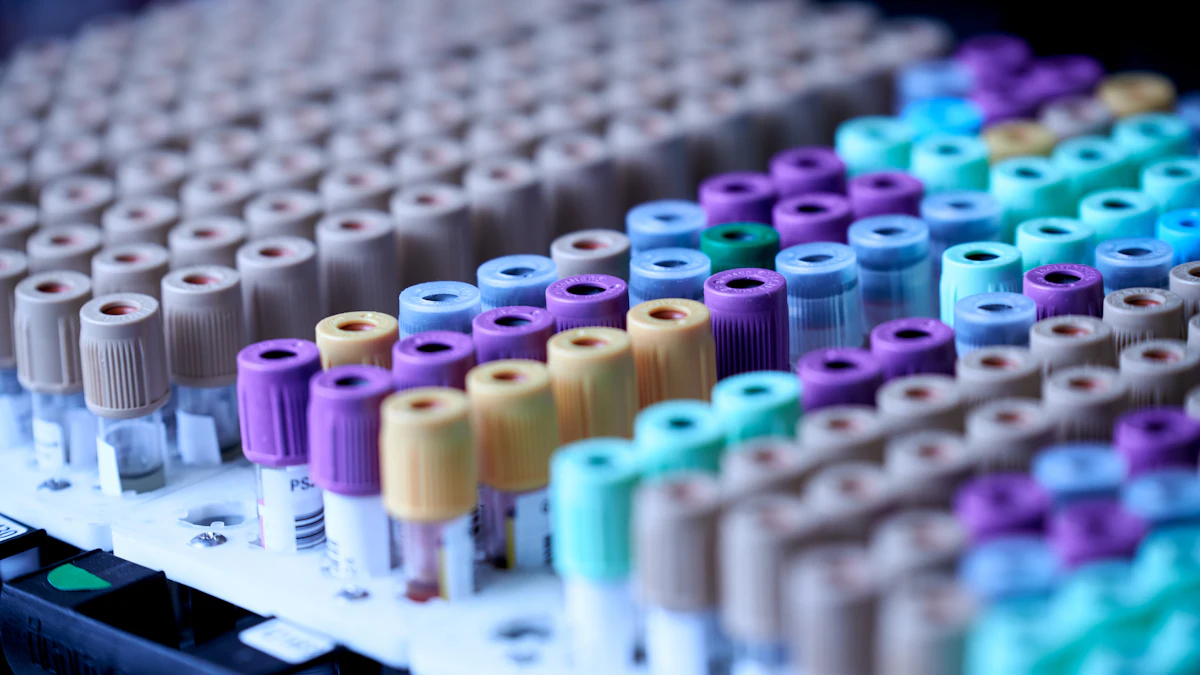
Preanalytical conditions directly affect reliability. According to the ASCO/CAP review, ctDNA testing is optimally performed on plasma collected in cell stabilization tubes or EDTA tubes, with EDTA tubes processed within 6 hours of collection.5 When the report states the tube type and processing time, a possible false-negative result is easier to interpret.
Residual disease assessment in early-stage cancer
Postoperative ctDNA detection of molecular residual disease has high clinical validity for predicting relapse. ESMO's 2022 recommendations did not support routine use because, at that time, there was no evidence of clinical utility for using it to direct treatment.2 The 2018 ASCO/CAP review likewise found no evidence of clinical utility for ctDNA assays in early-stage cancer, treatment monitoring, or residual disease detection.5
Randomized evidence is starting to accumulate. In the DYNAMIC trial of stage II colon cancer, 455 patients were randomized, and adjuvant chemotherapy was given to 15% of patients in the ctDNA-guided group versus 28% with standard management.7 Two-year recurrence-free survival was 93.5% with ctDNA-guided management and 92.4% with standard management, meeting the noninferiority criterion.7 Three-year recurrence-free survival was 86.4% in ctDNA-positive patients who received adjuvant chemotherapy and 92.5% in ctDNA-negative patients who did not.7
Later randomized trials have produced different results by tumor type. In IMvigor011 in muscle-invasive bladder cancer, 250 patients who became ctDNA-positive during serial monitoring after cystectomy were randomized to atezolizumab or placebo; atezolizumab extended median disease-free survival from 4.8 to 9.9 months (hazard ratio 0.64) and median overall survival from 21.1 to 32.8 months (hazard ratio 0.59).8 In DYNAMIC-III in stage III colon cancer, 3-year recurrence-free survival was 87% in ctDNA-negative and 49% in ctDNA-positive patients.9 In the same trial, de-escalation in ctDNA-negative patients did not meet the noninferiority margin, and escalation in ctDNA-positive patients did not improve recurrence-free survival.9
These results show that ctDNA is a strong prognostic marker in early-stage disease, while its value in directing treatment depends on the tumor type and the strategy tested. Because ESMO's 2022 recommendations do not support routine use, a decision based on residual disease should rest on published randomized evidence in the relevant tumor and on current guidelines.2
Reading the report alongside tissue findings
Whatever the indication, a liquid biopsy report should be read with the same principles as a tissue report and with its limitations in mind. Genes covered, limit of detection, estimated ctDNA fraction, and whether a clonal hematopoiesis filter was applied are the key details for interpretation. Discordant tissue and plasma results, or unclear treatment options, can be reviewed at a molecular tumor board. General steps for reading results are covered in how to read an NGS report, and the wider clinical context in what is molecular oncology.
Frequently asked questions
Can liquid biopsy replace tissue biopsy?
In most settings, liquid biopsy complements tissue biopsy rather than replacing it. ESMO states that tissue testing remains preferred for many patients because ctDNA assays are limited in detecting fusions and copy number changes. When tissue cannot be obtained or rapid results are needed, validated ctDNA assays can be used in routine practice.
What does a negative ctDNA result mean?
A negative ctDNA result does not prove that the tumor lacks the alteration. If the tumor sheds little DNA or the ctDNA fraction is low, the assay may miss it. ESMO therefore recommends considering tissue testing after a non-informative ctDNA result, and ASCO and CAP support confirming undetected results with tissue genotyping.
Is every mutation found in plasma tumor-derived?
No. Part of cell-free DNA comes from blood cells, and mutations from clonal hematopoiesis can look tumor-derived in plasma. In the study by Razavi and colleagues, more than half of plasma mutations in patients with cancer had features consistent with clonal hematopoiesis. Matched white blood cell sequencing helps make this distinction.
References
- Bettegowda C, Sausen M, Leary RJ, Kinde I, Wang Y, Agrawal N, et al. Detection of circulating tumor DNA in early- and late-stage human malignancies. Sci Transl Med. 2014;6(224):224ra24. doi:10.1126/scitranslmed.3007094 (opens in a new tab). PMID: 24553385
- Pascual J, Attard G, Bidard FC, Curigliano G, De Mattos-Arruda L, Diehn M, et al. ESMO recommendations on the use of circulating tumour DNA assays for patients with cancer: a report from the ESMO Precision Medicine Working Group. Ann Oncol. 2022;33(8):750-768. doi:10.1016/j.annonc.2022.05.520 (opens in a new tab). PMID: 35809752
- Rolfo C, Mack P, Scagliotti GV, Aggarwal C, Arcila ME, Barlesi F, et al. Liquid biopsy for advanced NSCLC: a consensus statement from the International Association for the Study of Lung Cancer. J Thorac Oncol. 2021;16(10):1647-1662. doi:10.1016/j.jtho.2021.06.017 (opens in a new tab). PMID: 34246791
- U.S. Food and Drug Administration. cobas EGFR Mutation Test v2. https://www.fda.gov/drugs/resources-information-approved-drugs/cobas-egfr-mutation-test-v2 (opens in a new tab) (accessed October 8, 2026)
- Merker JD, Oxnard GR, Compton C, Diehn M, Hurley P, Lazar AJ, et al. Circulating tumor DNA analysis in patients with cancer: American Society of Clinical Oncology and College of American Pathologists joint review. J Clin Oncol. 2018;36(16):1631-1641. doi:10.1200/JCO.2017.76.8671 (opens in a new tab). PMID: 29504847
- Razavi P, Li BT, Brown DN, Jung B, Hubbell E, Shen R, et al. High-intensity sequencing reveals the sources of plasma circulating cell-free DNA variants. Nat Med. 2019;25(12):1928-1937. doi:10.1038/s41591-019-0652-7 (opens in a new tab). PMID: 31768066
- Tie J, Cohen JD, Lahouel K, Lo SN, Wang Y, Kosmider S, et al. Circulating tumor DNA analysis guiding adjuvant therapy in stage II colon cancer. N Engl J Med. 2022;386(24):2261-2272. doi:10.1056/NEJMoa2200075 (opens in a new tab). PMID: 35657320
- Powles T, Kann AG, Castellano D, Gross-Goupil M, Nishiyama H, Bracarda S, et al. ctDNA-guided adjuvant atezolizumab in muscle-invasive bladder cancer. N Engl J Med. 2025;393(24):2395-2408. doi:10.1056/NEJMoa2511885 (opens in a new tab). PMID: 41124204
- Tie J, Wang Y, Loree JM, Cohen JD, Wong R, Price T, et al. Circulating tumor DNA-guided adjuvant therapy in locally advanced colon cancer: the randomized phase 2/3 DYNAMIC-III trial. Nat Med. 2025;31(12):4291-4300. doi:10.1038/s41591-025-04030-w (opens in a new tab). PMID: 41115959
Related articles
- Molecular diagnostics and biomarkers
How to read an NGS report: key steps for clinicians
- Molecular diagnostics and biomarkers
What is molecular oncology and how does it shape clinical practice